
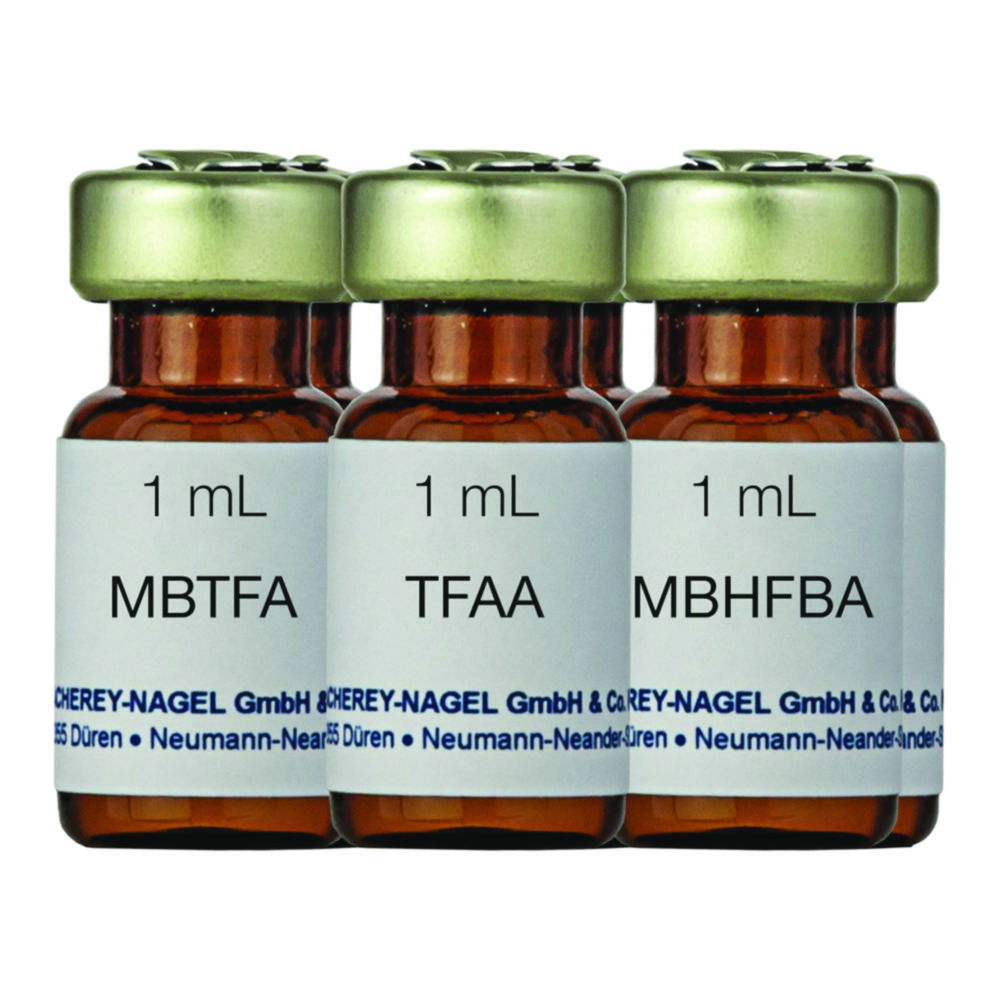
For improved volatility, better thermal stability or low limit of detection in gas chromatography prerequisite: quantitative, rapid and reproducible formation of only on derivative halogen atoms introduced by derivatisation (e.g. trifluoroacetates) allow specific detection (ECD) with the advantage of high sensitivity elution order and fragmentation patterns in MS can be influenced by a specific derivatisation.Which is the proper reagent for acylation?Test kit for determination of the optimum acylation.
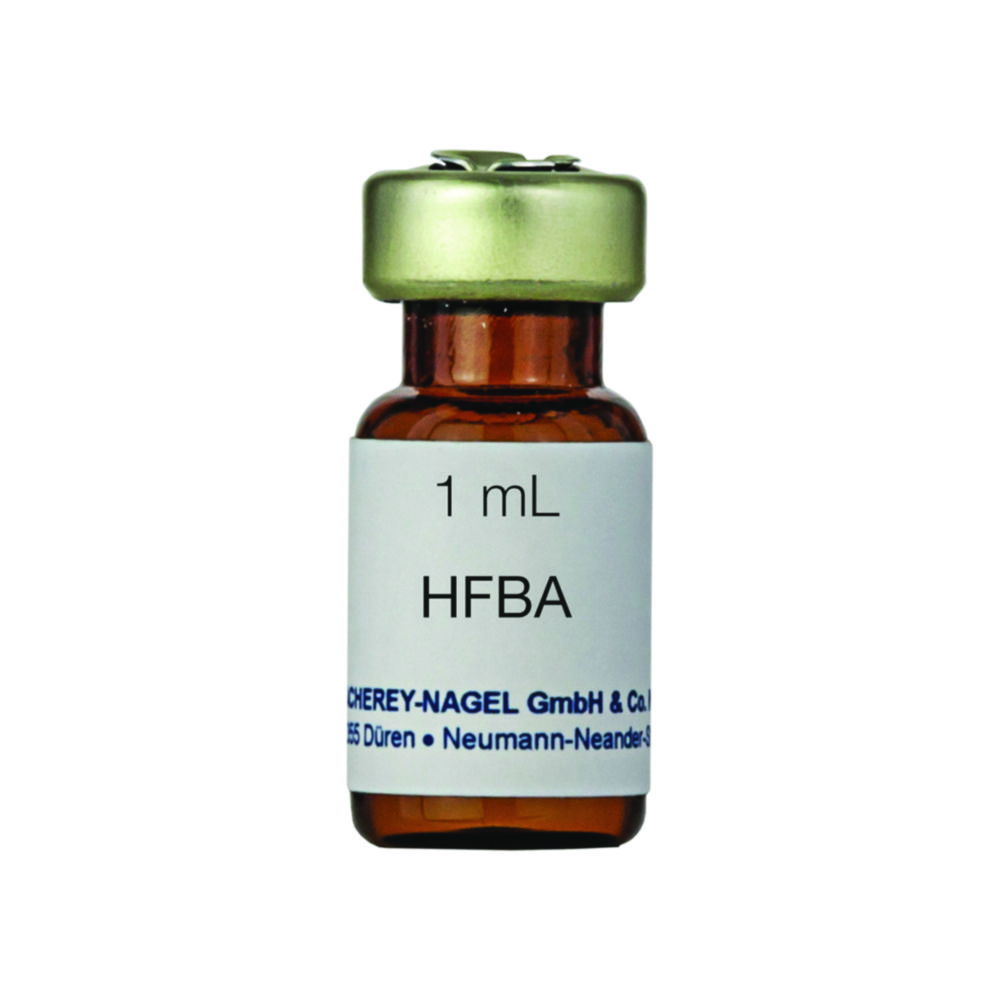
For improved volatility, better thermal stability or low limit of detection in gas chromatography prerequisite: quantitative, rapid and reproducible formation of only on derivative halogen atoms introduced by derivatisation (e.g. trifluoroacetates) allow specific detection (ECD) with the advantage of high sensitivity elution order and fragmentation patterns in MS can be influenced by a specific derivatisation.Acylation with fluorinated acid anhydrides can be used for alcohols, phenols, carboxylic acids, amines, amino acids and steroids forming volatile, stable derivatives suited for FID as well as for ECD detection.by-products of acylation with anhydrides: corresponding acidsexcess reagent and the acid formed have to be removedHeptafluorobutyric acid anhydride (HFBA)m.w. 410.06, Bp 106 - 107°C (760mm Hg),C3F7 - CO - O - CO - C3F7density d20°/4° = 1.665
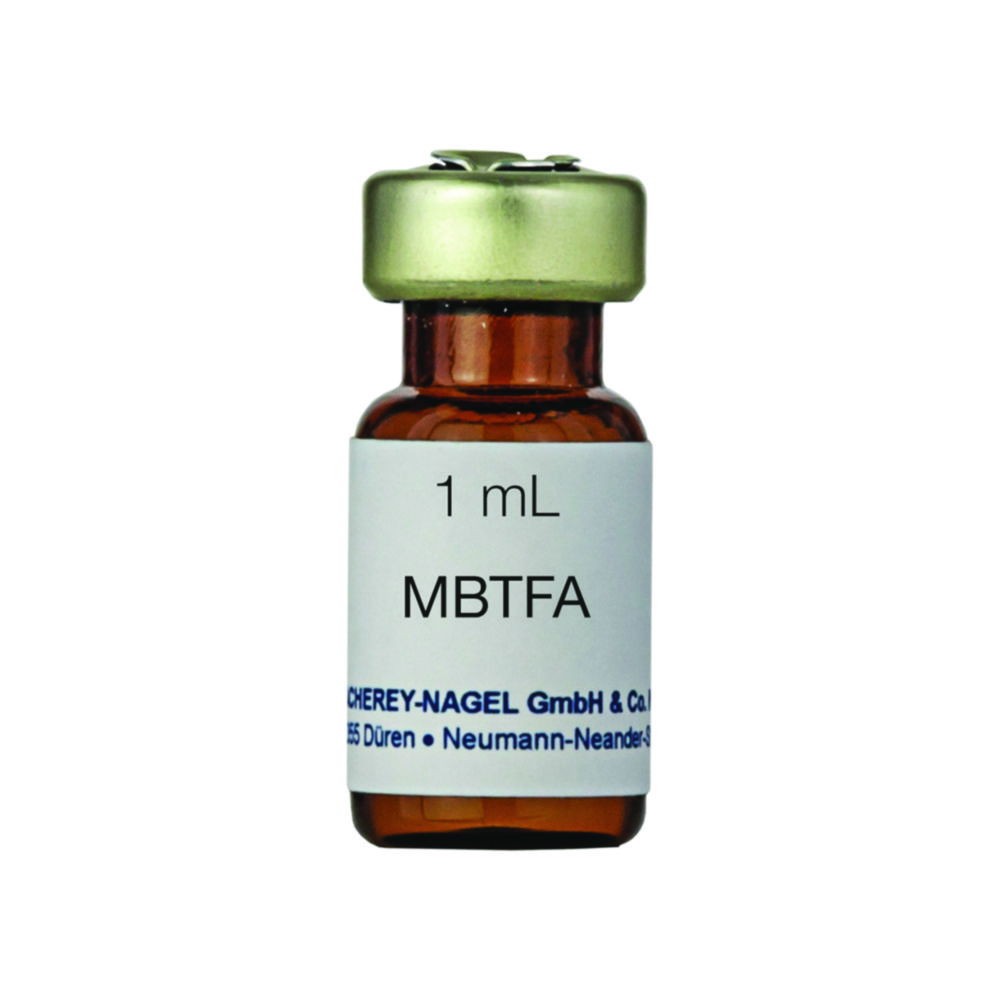
For improved volatility, better thermal stability or low limit of detection in gas chromatography prerequisite: quantitative, rapid and reproducible formation of only on derivative halogen atoms introduced by derivatisation (e.g. trifluoroacetates) allow specific detection (ECD) with the advantage of high sensitivity elution order and fragmentation patterns in MS can be influenced by a specific derivatisation.Acylation with fluorinated acid amides is recommended for alcohols, primary and secondary amines as well as for thiols under mild, neutral conditions. MBTFA also forms very volatile derivatives with carbohydrates.by-products: corresponding neutral acylamides, which can be easily removed due to their high volatility; because of neutral conditions and favourable chromatographic properties often removal of the bisacylamide is not necessary. Thus sample preparation is much more convenient.MBTFA / MBHFBAN-methyl-bis(trifluoroacetamide) MBTFAm.w. 223.08, Bp 123 - 124°C (760mm Hg), density d20°/4° = 1.55,CF3 - CO - N(CH3) - CO - CF3Due to their purpose, derivatisation reagents are very reactive substances. For this reason they should be stored cool and protected from moisture.The derivatisation reagents are supplied in vials with crimp caps for easy access with a syringe. Vials with pierced sealing disks have limited stability and should be used soon.
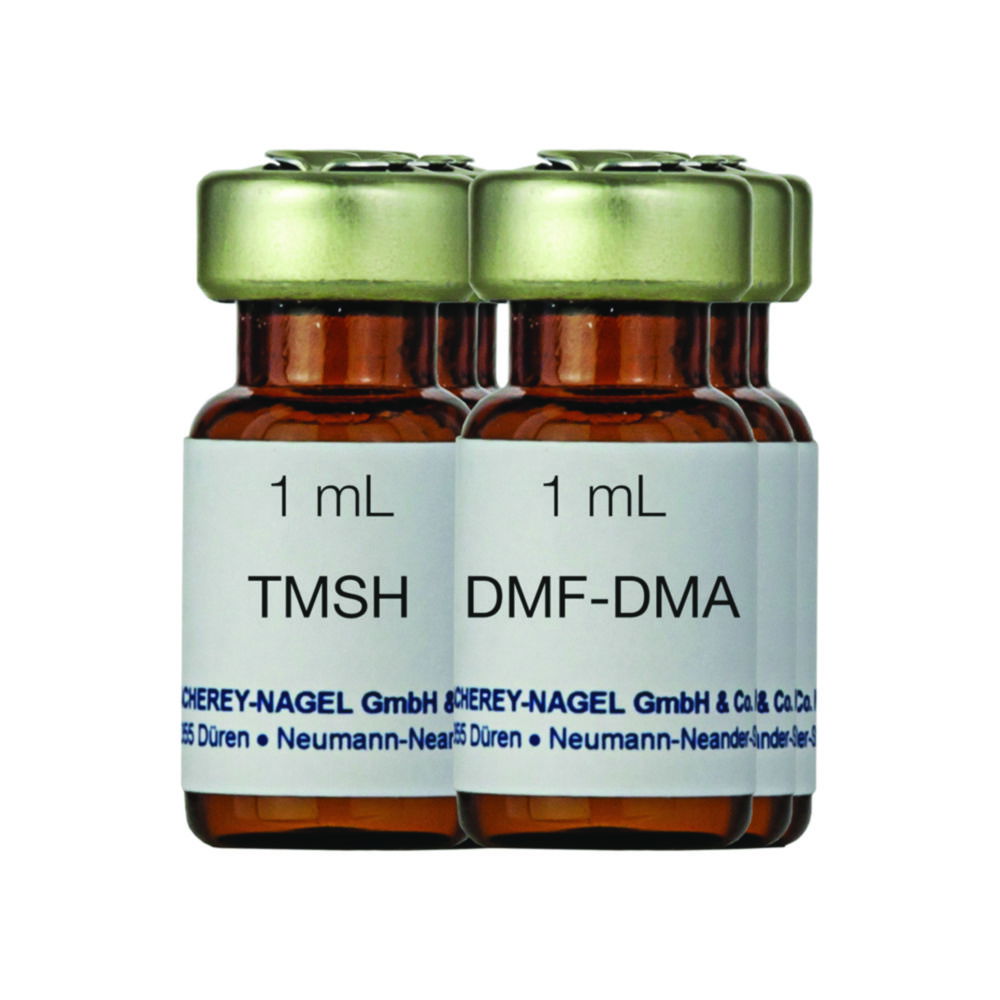
For improved volatility, better thermal stability or low limit of detection in gas chromatography prerequisite: quantitative, rapid and reproducible formation of only on derivative halogen atoms introduced by derivatisation (e.g. trifluoroacetates) allow specific detection (ECD) with the advantage of high sensitivity elution order and fragmentation patterns in MS can be influenced by a specific derivatisation.Which is the proper reagent for methylation?Test kit for determination of the optimum alkylation.
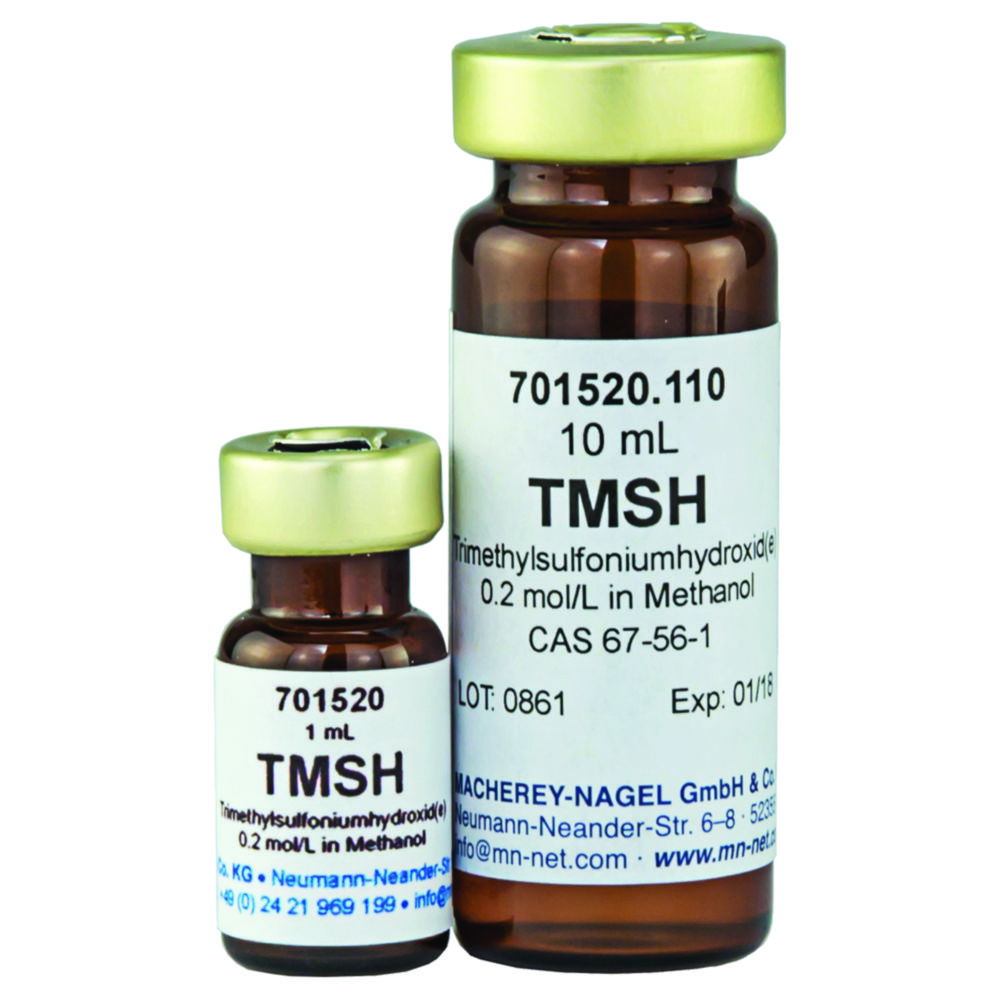
For improved volatility, better thermal stability or low limit of detection in gas chromatography prerequisite: quantitative, rapid and reproducible formation of only on derivative halogen atoms introduced by derivatisation (e.g. trifluoroacetates) allow specific detection (ECD) with the advantage of high sensitivity elution order and fragmentation patterns in MS can be influenced by a specific derivatisation.TMSH (0.2 M in methanol) M.G. 94.06
Cyanopropylphenyl Polysiloxane. For the analysis of volatile components of drinking water, chlorinated hydrocarbons, solvents and for the EPA method 624, USP G43 methods, SW-846 and 8240 / 8260 methods. Suitable replacement for: DB-624, OV-624, AT-624, HP-VOC, CP-Select624CB, 007-624, Rtx-Volatiles, VOCOL, ZB-624.
Cyanopropyl Polysilphenylene. Polar phase. For environmental analyses, volatile organic substances, alcohol analyses and for the EPA method 624, USP G43 methods, 502.2, SW-846 and 8240 / 8260 methods. Suitable replacement for: DB-VRX, HP-624, OPTIMA 624, ELITE-624, 007-624, RTXVOLATILES, SPB-624, TRV1, CPSIL 13 CB, VOCOL, VB-624, CP-624.
100% Dimethyl Polysiloxane. For high temperature hydrocarbon analysis and ASTM methods D2887 and D6532. Suitable replacement for: DB-2887, DB-HT Sim Dis, HP-1, Petrocol 2887, Petrocol EX2887, Rtx-2887.Non-polarLow bleed
50% Phenyl Polysilphenylene-siloxane. For a range of EPA methods (604, 608, 8060, 8081), pharmaceutical applications, triazines, herbicides and steroids. Suitable replacement for: OV-17, SP-2250, DB-17, DB-17ms, DB-17ht, Rtx-50, SPB-50, HP-50+, HP-17.
100% Dimethyl Polysiloxane. General purpose GC column for all routine analyses such as hydrocarbons, aromatics, pesticides, phenol, herbicides and amines. Suitable replacement for: DB-1, DB-Petro, HP-1, HP-1MS, Rtx-1, Ultra-1, SPB-1, SPB-1 Sulfur, Petrocol DH, CP-Sil 5CB, VB-1, ZB-1, VF-1ms.Low bleedNon-polar
100% Dimethyl Polysiloxane. For the analysis of petroleum products. Suitable Replacement for: Petrocol DH, DB-Petro, HP-PONA, AT-Petro, Elite-PONA, ZB-1, 007-1-100-0.5F, Rtx-1PONA, CP Sil PONA.Non-polar phase for PONA analysisDetailed hydrocarbon analysis according to ASTMCrosslinked and washableVery high resolving power columns for complex samples
14 % Cyanopropylphenyl Polysiloxane. For analysis of organochlorine pesticides. Suitable replacement for: DB-1701, Rtx-1701, SPB-7, HP-1701, CP-Sil 19CB, 007-1701, PE-1701, SP-1701.Low bleedHighly inertAble to be solvent rinsed
Polyethylene Glycol phase. GC column for analyses such as alcohol, free acids, fatty acid methyl esters, aromatics, solvents and essential oils. Suitable replacement for: Carbowax 20M, CP-Wax 52 CB, DB-WAX, Elite-WAX, HP-20M, HP-INNOWax RH-WAX, Rtx-Wax, Stabilwax, SUPELCOWAX 10, TG-WaxMS, VF-WAXms, ZB-WAX.Industry standard wax columnPolar phase
Nitroterephtalic acid modified PEG. For low molecular weight acids, alcohols, aldehydes, acrylates and ketones. Suitable replacement for: DB-FFAP, HP-FFAP, Stabilwax-DA, CPWax-58CB.Polar phaseAble to be solvent rinsed (water or methanol are not recommended for rinsing)
5% Phenyl / 95% Dimethyl Polysiloxane. Low bleed. General purpose GC column for all routine analyses such as aromatics, pesticides, herbicides, hydrocarbons. Suitable replacement for: DB-5, Rtx-5, HP-5, Ultra-2, PTE-5, SPB-5, MDN-5, CP-Sil 8CB, VB-5, ZB-5, VF-5ms.
5% Phenyl Polysilphenylene-siloxane. For 5% GC-MS analysis and general purpose MS analysis. Suitable replacement for: DB-5ms, ZB-5ms, Rxi-5Sil MS, VF-5ms, CP-Sil 8 CB.
For Dioxins and related compounds (POPs, PCBs, PCDFs, PCDDs).Very low bleedNon-polarExtremely inertIdeal for GC-MS
35 % Phenyl Polysilphenylene-siloxane. Suitable Replacement for: DB-35, DB-35ms, Rtx-35, HP-35, HP-35MS, SPB-35, MDN-35.Very low bleedInertMid polarity columnEquivalent to USP phase G42High temperatureAble to be solvent rinsed
5% Phenyl Polysilphenylene-siloxane. General purpose GC column for routine gas chromatographic analysis. Suitable replacement for: DB-5, DB-5ms, DB-5.625, XTI-5, Rtx-5ms, Ultra-2, HP-5, HP-5MS, HP5-TA, SPB-5, MDN-5S, CP-Sil8CB, Rxt-Sil 5MS, AT-5ms, VB-5, ZB-5, VF-5ms.Very low bleedNon-polarExtremely inert
35% Phenyl Polysilphenylene-siloxane. For environmental analyses, EPA 608, pesticides and herbicides. Suitable replacement for: DB-608, Rtx-35, SPB-608, HP-35, ZB-35.
70% Cyanopropyl Polysilphenylene-siloxane. Able to be solvent rinsed. Industry standard column for fatty acid methyl esters, carbonhydrates, pharmaceuticals, GC/MS applications. Suitable alternative to: DB-23, Rtx-2330, SP-2330, CP-Sil 88, SP2380, HP-23.
90% Cyanopropyl Polysilphenylene-siloxane. For the fast separation of fragrances, aromatics, pesticides, PCB, isomers of fatty acid methyl esters.Bonded phaseHighly polarThermally stableAble to be solvent rinsed
Permethylated Beta-Cyclodextrin (Chiral). Suitable replacement for: Cyclodex-B, Rt-BDEXm, LIPODEX C. Phase for the separation of chiral compound e.g. separation of enantiomeric compounds found in natural products.
100% Dimethyl Polysiloxane in a SolGel matrix. Suitable Replacement for: DB-1, DB-Petro, HP-1, HP-1MS, Rtx-1, Ultra-1, SPB-1, SPB-1 Sulfur, Petrocol DH, CP-Sil 5CB, VB-1, ZB-1, VF-1ms.Less bleedNon-polarHighly inertSame selectivity as BP1
5% Phenyl Polycarborane siloxane. Ultra-high temperature columns for simulated distillation applications, general hydrocarbon profiles, pesticides, herbicides and for GCMS applications.
8 % Phenyl Polycarborane-siloxane. Ultra high temperature columns for polychlorinated biphenyl compounds (PCB), nitro-substituted aromatics, polynuclear aromatic hydrocarbons, pesticides and herbicides.
Polyethylene Glycol (PEG) in a SolGel matrix. Suitable replacement for: DB-Wax, Rtx- Wax, Stabilwax, HP20M, HP-Wax, HP-INNOWax, Supelcowax-10, AT-Wax, Nukol, CP, Wax 52CB, VB-WAX, ZB-WAX.Robust high-temperature column.Polar phaseLow bleed and inert
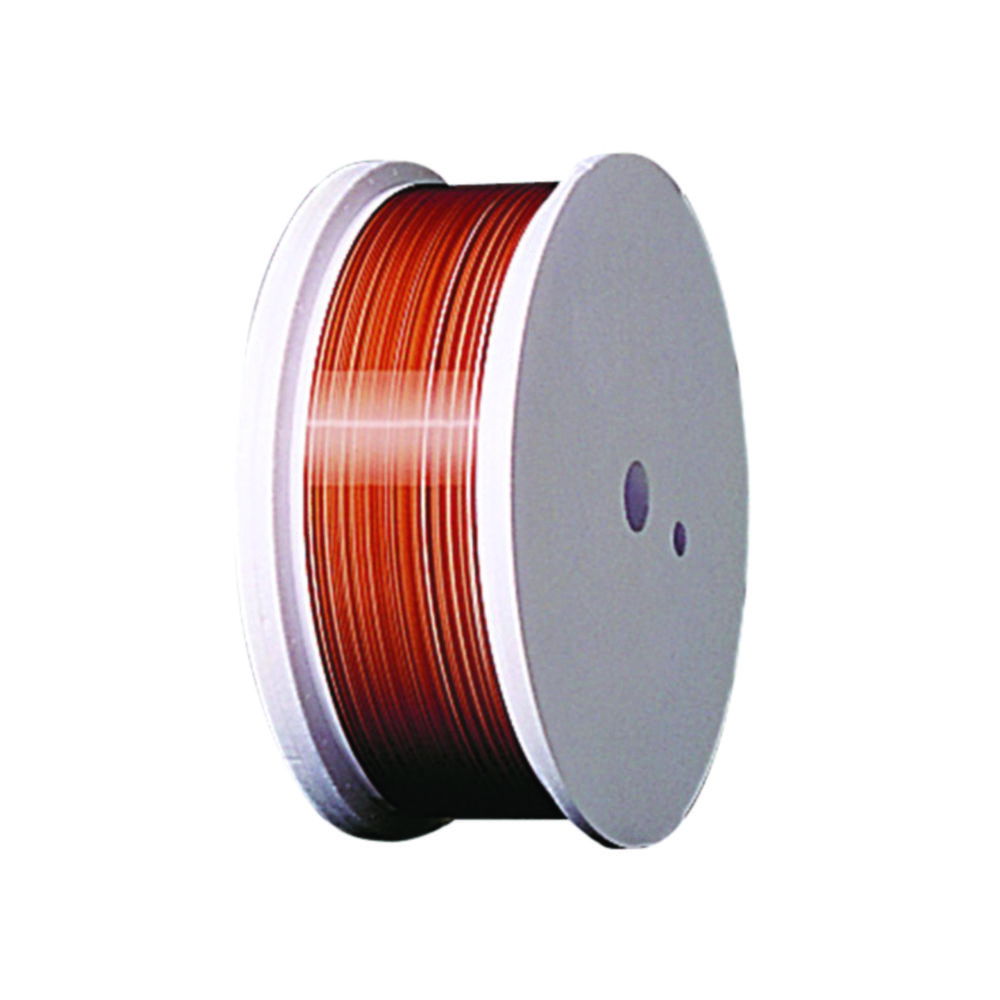
Coated fused silica tubing for GC capillary applications.High homogeneityChemically inertStandard polyimide temperature resistance up to 380 °CPolyimide coating is chemically resistantLow dielectric constant, low dielectric lossImpermeable to all gases (except H2, He)Free of thermal hysteresisHigh intrinsic tensile strengthVery low thermal expansionUse with hydrofluoric acid, phosphoric acid, alkalis and alkali metal-containing compounds should be avoided, as this can lead to dissolution of the quartz glass and devitrification of the surface.
Coated fused silica tubing for GC capillary applications.High homogeneityChemically inertStandard polyimide temperature resistance up to 380 °CPolyimide coating is chemically resistantLow dielectric constant, low dielectric lossImpermeable to all gases (except H2, He)Free of thermal hysteresisHigh intrinsic tensile strengthVery low thermal expansionUse with hydrofluoric acid, phosphoric acid, alkalis and alkali metal-containing compounds should be avoided, as this can lead to dissolution of the quartz glass and devitrification of the surface.
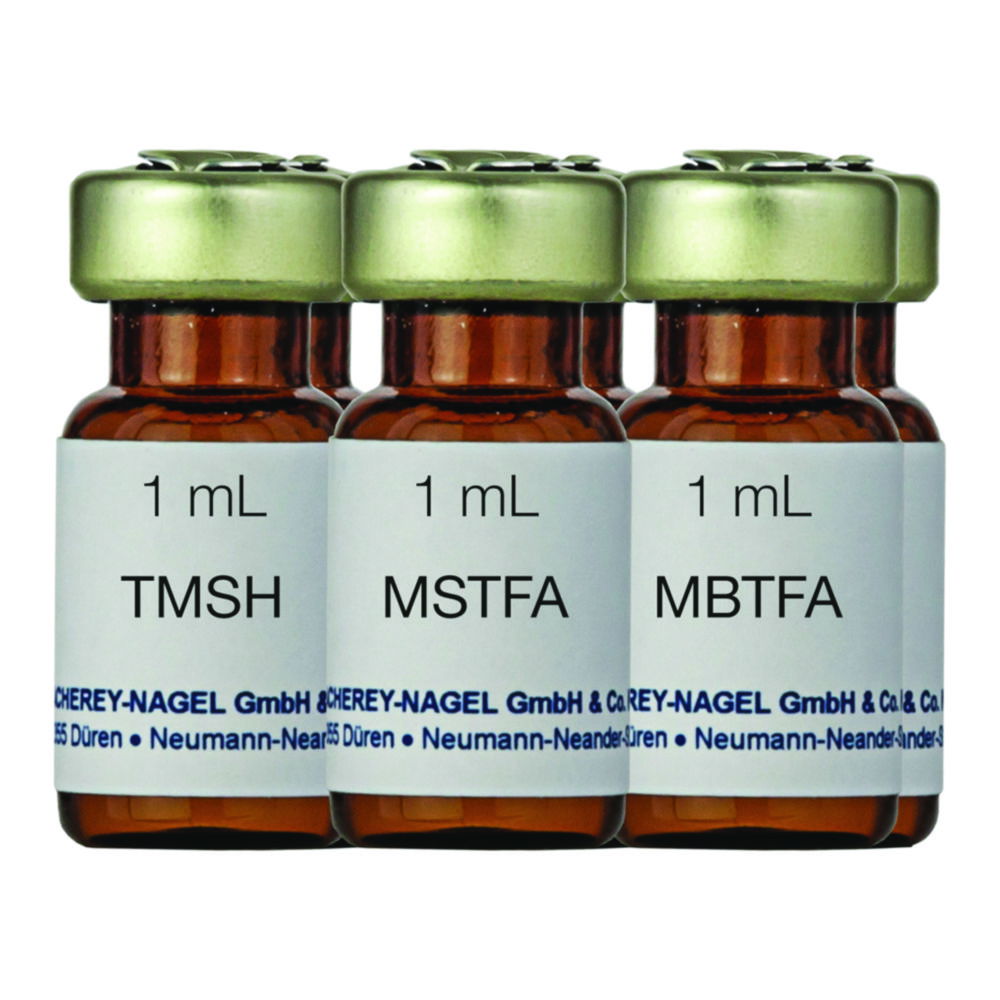
For improved volatility, better thermal stability or low limit of detection in gas chromatography prerequisite: quantitative, rapid and reproducible formation of only on derivative halogen atoms introduced by derivatisation (e.g. trifluoroacetates) allow specific detection (ECD) with the advantage of high sensitivity elution order and fragmentation patterns in MS can be influenced by a specific derivatisation.Which type of derivatisation is best suited for your sample (alkylation, silylation or acylation)? Test kit for determination of the optimum derivatisation.
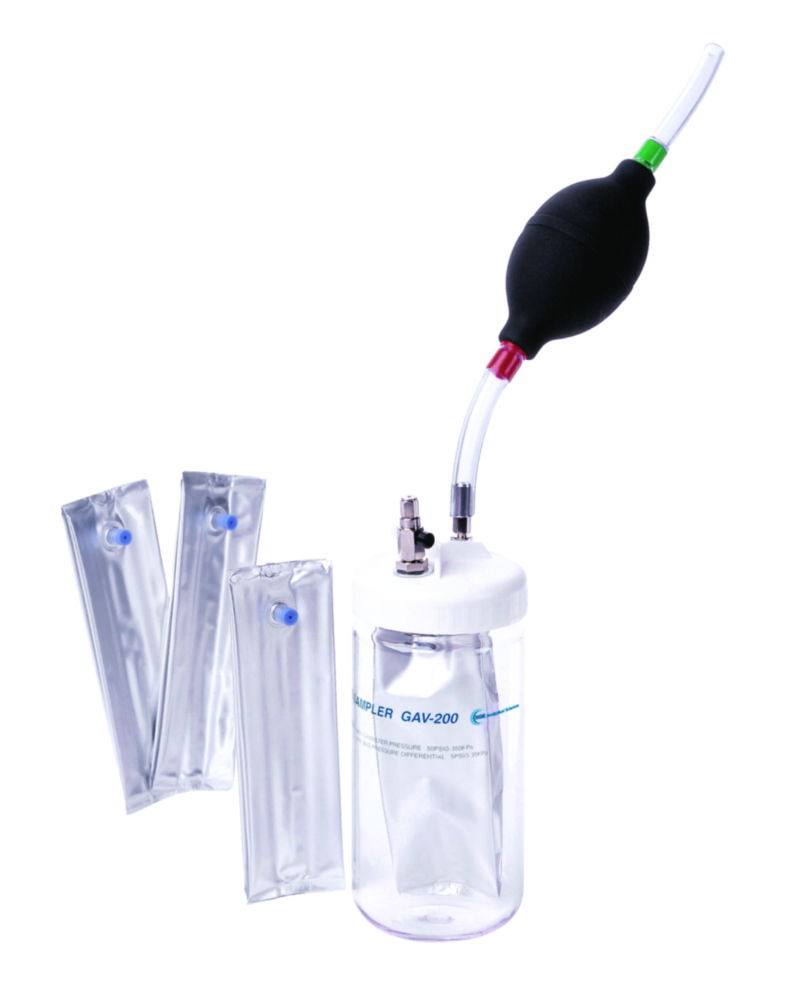
The gas and vapor sampler enables spot collection of environmental gas samples or low pressure gas streams in 200 cm3 impervious resealable bags. Ideal for field analysis.Scope of supply: Canister, bulb, 10 bags, marker pen, instructions